


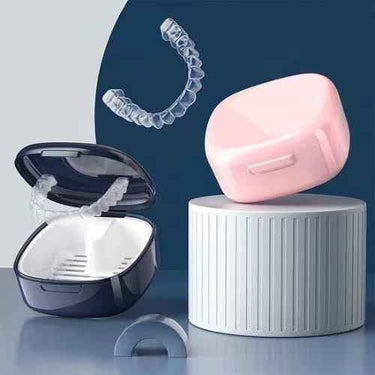

In the healthcare and oral care industry, packaging is undergoing a profound transformation. Traditionally, packaging design focused on two core functions: protecting the product and ensuring sterility. Functionality was the only standard of evaluation.
However, with the upgrading of consumer expectations and the growing awareness of branding, modern oral care brands are redefining the value of packaging. Today, dental packaging has moved far beyond its role as a simple container. It has evolved into a powerful branding tool. It is not only the final layer of protection before delivery but also the first physical touchpoint between the brand and the consumer, directly enhancing brand recognition and leaving a strong professional impression.
In the past, implant trays or orthodontic boxes received by dental clinics were often made of plain transparent plastic or kraft paper, designed only to meet basic storage needs.
Today, the shift toward premium packaging has become a clear industry direction. This transformation is not merely about changing materials—it represents a shift in brand thinking. Modern dental packaging draws inspiration from consumer electronics and luxury goods, using structural innovation and refined aesthetics to turn clinical products into branded experiences.
For example, drawer-style or flip-top opening structures, combined with precise die-cutting techniques, allow dentists or patients to immediately perceive the product’s precision and the brand’s professionalism upon opening.

Regardless of visual upgrades, protection remains the fundamental requirement of dental packaging. As an extension of medical products, packaging must meet uncompromising standards.
For delicate and fragile dental components such as implants, abutments, or ceramic brackets, packaging must withstand drops and compression during transportation. High-resilience materials, such as rigid specialty paperboard and EVA inserts, are widely used. These materials prevent sharp components from puncturing the packaging while maintaining structural stability under temperature variations.
For products requiring sterilization—such as ethylene oxide (EO) or gamma radiation—packaging materials must also demonstrate strong resistance, ensuring they do not become brittle or deformed while maintaining the integrity of the sterile barrier.
This combination of physical protection and sterility maintenance forms the foundation of high-end dental packaging.
Once functional protection is ensured, visual and tactile sophistication becomes the key differentiator between standard and premium products.
By applying specialty finishing techniques to paper-based packaging, brands can instantly elevate perceived value. For example, holographic foil stamping or metallic UV coatings applied to deep-colored surfaces create a clean, high-tech visual effect.
The combination of matte textures with embossed or debossed details allows brand logos to achieve a refined, three-dimensional appearance under light.
These design elements are not excessive—they are essential visual languages that communicate core brand values such as precision, professionalism, and purity, helping products stand out in clinics or display environments.

While external appearance determines initial attraction, internal design defines the user experience.
High-end dental packaging is no longer a simple combination of product and filler. Instead, it is a carefully designed storage system based on ergonomic and clinical workflow considerations.
For example, implant packaging may feature nested sliding trays that keep components securely in place during transport while allowing nurses to open and access them easily with one hand.
For orthodontic products, inner trays can clearly separate upper and lower arch components and may even include dedicated compartments for scans or instruction manuals.
This approach ensures that packaging is not only capable of holding products securely but also enables smooth and efficient handling, significantly improving clinical usability.
In an era of visual overload, consistent branding is essential for building professional trust.
Customized branding goes far beyond simply printing a logo on the box. It involves the standardized use of Pantone colors and consistent visual elements across all packaging details.
Signature brand colors can be subtly integrated into elements such as inner linings or pull tabs, creating unique visual memory points.
Through customized printing, brands can incorporate certifications, patented technology icons, and anti-counterfeiting features into the packaging. In this way, every package becomes a mobile brand asset that reinforces professionalism and credibility.
With increasingly strict global environmental regulations and rising consumer demand for eco-friendly solutions, sustainable packaging has become essential rather than optional.
The oral care industry is transitioning from multi-material composites to single-material, recyclable solutions. Brands are replacing complex materials with recyclable paperboard or biodegradable alternatives.
Using FSC-certified recycled paperboard reduces carbon footprint while maintaining a high-quality appearance. With advanced printing techniques, recycled materials can achieve a finish comparable to virgin paper.
For brands, adopting sustainable packaging is not only a responsibility but also an effective way to communicate long-term commitment and environmental values.

Ultimately, all packaging details revolve around one core principle: the user experience.
Features such as transparent windows allow quick product identification and reduce unnecessary handling. Smooth drawer mechanisms combined with ribbon pulls enhance the unboxing experience and create a sense of ritual.
An excellent dental package should enable dentists to work efficiently while giving patients a sense of confidence and reassurance.
At the moment the package is opened, the professional atmosphere and emotional value conveyed by the packaging help establish trust before the product is even used.
In today’s highly competitive oral care market, every detail is an opportunity for brands to communicate their value.
If your brand aims to connect with users through a more refined and distinctive presentation, it may be time to rethink your packaging strategy. Companies like PINES, with deep industry expertise, bring these details to life—transforming customized dental packaging into a powerful extension of brand value.

