


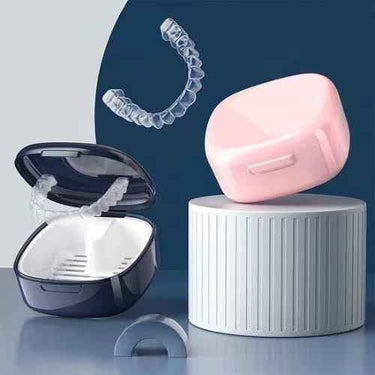


When choosing between a plastic retainer case and a magnetic retainer case, the decision is not simply about selecting a lower-cost or premium option. The difference lies in product positioning, target users, and long-term usage experience.
A plastic snap retainer case offers cost efficiency based on a simple and mature structure, while a magnetic retainer case provides a premium experience through improved closure stability, convenience, and durability. For dental brands, orthodontic suppliers, and distributors, understanding these differences helps create a more suitable product strategy.
The fundamental difference between plastic and magnetic retainer cases comes from their closure systems.
A plastic snap retainer case uses a mechanical locking structure. The upper and lower covers connect through an injection-molded snap design, usually combined with an integrated plastic hinge or living hinge structure. Its biggest advantage is reliability through physical locking.
When users press the lid closed and hear a clear “click,” they receive direct confirmation that the retainer or dental appliance has been securely stored. For some users, this tactile and audible feedback creates a sense of security.
A magnetic retainer case eliminates traditional snap mechanisms. Small magnets embedded along the edges of the case automatically align and attract when the lid approaches the base. Users do not need to apply pressure or search for a locking point.
Because magnetic closure relies on continuous magnetic force instead of repeated plastic deformation, it avoids one common weakness of plastic snap designs: fatigue caused by frequent opening and closing.
From a failure perspective, plastic snap cases usually experience gradual wear. The closure may become loose over time, the lid may begin to lift slightly, and eventually the snap connection may break during daily use.
Magnetic retainer cases generally have fewer closure-related failures under normal conditions. Potential issues are usually caused by external damage, such as a strong impact causing the case structure to shift, rather than the magnetic system itself.

The cost advantage of plastic retainer cases comes from efficient manufacturing processes and affordable materials.
Most plastic retainer cases use polypropylene (PP) materials combined with injection molding technology. The production cycle is fast, mold costs can be distributed across large quantities, and the final unit cost remains highly competitive.
This is why plastic retainer cases are often provided as orthodontic treatment accessories or clinic giveaways. For dental clinics purchasing in bulk, the cost impact is minimal.
Magnetic retainer cases require additional manufacturing steps. The installation of magnets increases assembly requirements, while precise mold design is needed to ensure accurate alignment between the lid and base.
Premium magnetic retainer case designs may also include additional features such as silicone liners, mirrors, ventilation holes, or customized interior structures. These added components increase production costs and create a higher retail price compared with standard plastic cases.
For buyers, whether the price difference is worthwhile depends on the expected user experience. If customers are comfortable replacing a case after snap damage, plastic cases remain an effective cost-saving option.
However, if a dental brand wants to build a reputation around durability, quality, and premium care, the higher initial cost of magnetic retainer cases should be evaluated together with potential customer satisfaction and product replacement risks.
Plastic retainer cases are better suited for simple and fixed storage situations.
For example, when a case stays on a bedside table or bathroom counter and is opened only occasionally, a plastic snap design can provide sufficient protection and functionality.
However, orthodontic retainers are often used multiple times every day. Users may remove and store their retainers several times daily, creating thousands of opening and closing cycles every year. Under frequent-use conditions, plastic snap structures may gradually loosen or become damaged due to repeated stress.
A magnetic retainer case provides a wider range of application scenarios.
The one-hand opening experience is especially useful during commuting, office work, travel, or sports activities. Users can open the case quickly without putting down other items or carefully locating a snap button.
The silent closing experience is another overlooked advantage. The clicking sound from plastic snap cases may become noticeable in quiet environments such as libraries, meeting rooms, or bedrooms at night. Magnetic closure provides a smoother and quieter user experience.
However, magnetic retainer cases are not superior in every situation. Under extreme impact conditions, a mechanical snap lock may sometimes provide stronger resistance against accidental separation.
For users who mainly store retainers at home and rarely carry the case outdoors, a traditional plastic case with a strong snap closure can still provide practical protection.

A purchasing decision should not rely only on product specifications. Physical sample testing can quickly reveal the actual quality of a retainer case.
For plastic snap retainer cases:
Open and close the case more than twenty times to check whether the locking strength changes. Press lightly against the closed lid edge to test whether the snap structure can resist external pressure without opening.
Also check the thickness and flexibility of the hinge area. Extremely thin living hinges may become brittle and break more easily, especially under low-temperature conditions.
For magnetic retainer cases:
After closing the case, gently apply sideways pressure to the lid and check whether the structure remains stable. A high-quality magnetic closure should resist minor horizontal movement.
Open the case and inspect the magnet placement and quantity. Four-point magnetic positioning usually provides more balanced attraction compared with two-point designs.
The interior structure should also be checked, especially whether the silicone liner can be removed. This directly affects cleaning convenience and long-term hygiene.
Cleaning and maintenance are often overlooked factors when choosing a retainer case.
Plastic snap retainer cases may have small gaps around the locking mechanism that are difficult to clean and dry completely. Moisture trapped inside these areas may contribute to unpleasant odors or hygiene concerns over time.
Some plastic cases include ventilation holes to improve airflow, but these openings may also allow dust or particles to enter.
Magnetic retainer cases generally offer advantages in daily maintenance. Without complicated snap structures, the smooth interior reduces cleaning difficulties. Removable silicone liners can be taken out and washed separately.
For users who prioritize oral hygiene, this difference may become more important than the closure mechanism itself.
Plastic snap retainer cases are designed for cost-conscious users who need basic storage, simple protection, and affordable replacement options.
Magnetic retainer cases are designed for customers who value convenience, quiet operation, premium experience, and long-term reliability.
For dental brands, orthodontic suppliers, and distributors, the key question is not simply “Which retainer case is better?”
The real decision is understanding how your customers will evaluate the product after six months or one year of daily use.
Choosing the right custom retainer case solution means matching product design with user expectations, brand positioning, and market demand.
If you are planning a dental accessory product portfolio or looking for reliable retainer case manufacturing solutions, subscribe to our updates. PINES regularly shares insights on dental packaging trends, product development, material selection, and industry supply chain information.

