



The Impact of Traditional Packaging on the Oral Care Industry
For decades, the oral care industry has relied heavily on single-use plastic packaging. From toothpaste cartons and toothbrush blister packs to dental floss containers and individually wrapped replacement heads, traditional packaging systems are almost entirely based on petrochemical materials.
This model gained rapid popularity in the twentieth century due to its low cost, ease of manufacturing, lightweight nature, and ability to provide effective hygiene barriers. However, the industry has rarely addressed a fundamental question: these packages are discarded within minutes of opening, yet they persist in the environment for hundreds of years.
The consequences extend far beyond visible waste. Producing plastic packaging consumes fossil fuels and generates significant greenhouse gas emissions. Even more concerning, most oral care packaging is not designed with end-of-life management in mind. Multi-layer composite materials—such as toothpaste tubes,
tiny plastic components, and containers that are difficult to empty make recycling extremely challenging. Each year, the oral care industry generates billions of pieces of packaging waste, the vast majority of which end up in landfills or the natural environment. As global awareness of plastic pollution continues to grow, the traditional packaging model is no longer sustainable and must be fundamentally re-evaluated.

Plastic use in oral care products extends far beyond what most consumers realize. Toothbrush handles are plastic, toothpaste tubes are often plastic-aluminum composites, dental floss containers are typically made of polypropylene or polystyrene, mouthwash bottles use high-density polyethylene, and even orthodontic retainer storage cases are injection-molded plastic.
The issue is not that plastic is inherently toxic—many medical-grade plastics are safe—but that these products are designed for short lifespans or single-use applications. A toothbrush may be used for three months, yet its plastic handle can remain in the environment for up to 500 years. Similarly, a retainer case may serve its purpose for only a year or two, but once discarded, it fragments into microplastics rather than decomposing.
Microplastics are a particularly pressing concern. Exposure to sunlight, friction, and temperature changes causes oral care plastics to degrade into particles smaller than 5 millimeters. These particles enter soil and water systems, are ingested by plankton, and move up the food chain, ultimately reaching the human body. Studies have detected microplastics in human blood, feces, and even placental tissue. Because oral care products are used in proximity to the mouth, their packaging may represent a more direct exposure pathway. This issue extends beyond environmental pollution to public health, yet the industry’s response has been slow.
Recycling is often presented as a viable solution, but in practice, it offers limited effectiveness for oral care packaging.
1. Multi-Material Composition
Toothpaste tubes are a prime example. They typically combine different plastics, aluminum layers, and residual toothpaste, making separation and cleaning economically and technically impractical. As a result, most municipal recycling programs do not accept them.
2. Small Plastic Components
Many oral care items—such as floss dispensers, blister pack seals, and individual replacement head wrappers—are smaller than two inches. These pieces fall through sorting equipment at recycling facilities and are automatically classified as residual waste destined for landfills.
3. Recycling Economics
Virgin plastic remains cheaper than recycled plastic. The processes of collecting, transporting, cleaning, and reprocessing recycled materials significantly increase costs. Without regulatory mandates requiring recycled content, brands lack economic incentives to design recyclable packaging, and recycling facilities have little motivation to process low-value, contaminated waste. Consequently, even when consumers place oral care packaging in recycling bins, most of it is ultimately incinerated or landfilled.

Shifting environmental responsibility onto consumers has long been a strategy within the oral care industry. Labels encouraging consumers to “please recycle” often obscure the reality that successful recycling depends on industrial-level sorting and processing capabilities beyond the consumer’s control.
Consumers can influence purchasing decisions and disposal behavior, but they cannot redesign packaging structures or alter recycling infrastructure. Expecting consumers to compensate for design flaws is both unrealistic and unfair. Effective responsibility must shift upstream to manufacturers, who are best positioned to create packaging that is genuinely recyclable or biodegradable. Consumer participation is valuable, but it cannot replace responsible design.
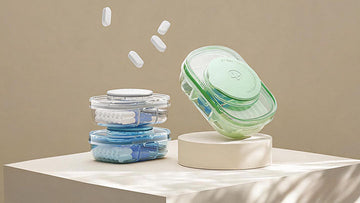
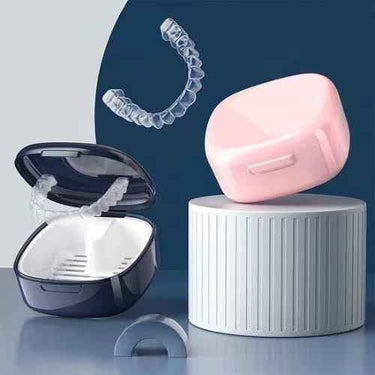
In response to the widespread use of non-degradable plastic retainer cases, innovative alternatives are emerging. These products must be waterproof, durable, and portable—qualities traditionally associated with plastic. However, plastic is not the only material capable of meeting these functional requirements.
The PINES dental bath case utilizes bio-based or biodegradable composite materials that match the performance of conventional plastics while offering significantly improved environmental outcomes at the end of their lifecycle.
The key technical challenge lies in achieving structural strength and sealing performance while ensuring complete degradation under industrial composting conditions. Unlike traditional plastic cases that persist indefinitely, biodegradable cases can be broken down by microorganisms into carbon dioxide, water, and biomass. Additionally, because retainers are stored in moist environments, the materials must exhibit antimicrobial and moisture-resistant properties. Balancing biodegradability with mold resistance is a critical aspect of product development.

True sustainability goes beyond incremental improvements to existing plastic packaging. It requires rethinking the entire packaging system—from material selection to end-of-life management. A genuinely sustainable oral care package should meet three essential criteria:
Renewable or Recycled Raw Materials – Derived from renewable resources or existing waste streams.
Lower Carbon Footprint – Significantly reduced greenhouse gas emissions compared to virgin plastics.
Effective End-of-Life Solutions – Ability to decompose safely through existing infrastructure, such as industrial or home composting.
Bio-based materials such as polylactic acid (PLA), bamboo fiber composites, and mycelium-based materials are increasingly being adopted in oral care packaging. These materials can decompose within weeks to months under industrial composting conditions, compared to the centuries required for conventional plastics. Moreover, their carbon footprints are lower because plants absorb carbon dioxide during growth, partially offsetting emissions from production.
Biodegradability must not come at the expense of product effectiveness. Oral care packaging must protect its contents from contamination, moisture, and physical damage. Retainer cases, in particular, must maintain hygiene to prevent bacterial growth.
Advanced materials such as polybutylene succinate (PBS) reinforced with bamboo or straw fibers, and PLA derived from corn starch, provide hardness and dimensional stability comparable to ABS plastics while offering acceptable water resistance. Under industrial composting conditions, these materials can achieve degradation rates exceeding 90% within 180 days.
It is important to note that home composting environments may not provide the necessary temperature and microbial activity for complete degradation. Therefore, brands should clearly label disposal instructions as “industrially compostable” rather than “home compostable” to avoid consumer misunderstanding.

Sustainable oral care involves more than replacing a single product; it requires rethinking the entire user experience. From a packaging perspective, sustainability can be addressed at three levels:
Material Transition – Shifting from non-degradable plastics to bio-based, compostable materials.
Structural Simplification – Eliminating unnecessary multi-layer composites and small, hard-to-recycle components.
Usage Model Innovation – Moving from single-use packaging to reusable containers paired with refill systems.
For example, orthodontic patients often receive a new plastic retainer case with each treatment. In reality, a well-designed case can be reused for several years. Adopting a “case-once, refill thereafter” model can significantly reduce unnecessary packaging waste. Similarly, toothbrushes with replaceable heads and metal or bamboo handles can reduce plastic consumption by more than 80%.
1. Choose Products with Sustainable Packaging
Consumers can drive change through informed purchasing decisions. Look for packaging that clearly indicates material composition and certifications such as industrially compostable or biodegradable. Opt for toothpaste tablets in glass containers, silk dental floss in reusable metal dispensers, and bamboo or replaceable-head toothbrushes.
2. Replace Single-Use Plastic with the PINES Retainer Case
Orthodontic patients frequently receive disposable plastic bags or cases. A durable, biodegradable PINES retainer case can replace dozens or even hundreds of single-use plastic items. After its service life—typically two to three years—the case can be directed to industrial composting facilities rather than landfills, embodying the principle of waste reduction.
3. Dispose of Packaging Correctly
Even the most sustainable packaging requires proper disposal to realize its environmental benefits. Landfills are designed to limit oxygen and moisture, conditions that inhibit biodegradation. Therefore, disposal priority should be:
Industrial Composting > Home Composting (if certified) > General Waste (last resort)
Consumers should also follow local recycling guidelines for traditional plastics when accepted.
The sustainable transformation of oral care packaging is not a distant vision but an urgent necessity. Traditional plastic packaging has long delivered functional benefits while externalizing its environmental costs to society and ecosystems. Recycling alone cannot resolve this challenge due to technological, economic, and infrastructural limitations.
Bio-based and biodegradable materials offer a viable and scalable alternative. They maintain product performance while fundamentally changing the end-of-life scenario—from centuries of persistence to a return to nature within months. Accessories such as retainers and dental bath cases exemplify how thoughtful design can replace countless single-use plastic items without compromising convenience.
Ultimately, sustainable oral care is about returning to common sense: replacing non-renewable, persistent materials with renewable, degradable alternatives. This is not a radical proposition but a practical engineering decision. The future of oral care packaging belongs to products that consider their entire lifecycle from the very first day of design. As demonstrated by the PINES retainer case, environmental responsibility and product effectiveness are not opposing goals—they are complementary and essential.
