


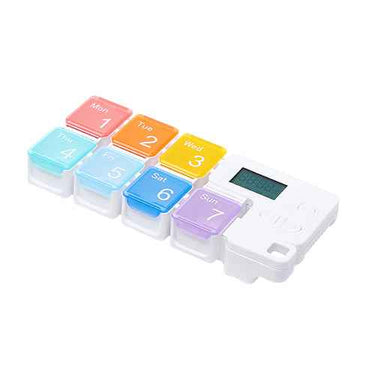
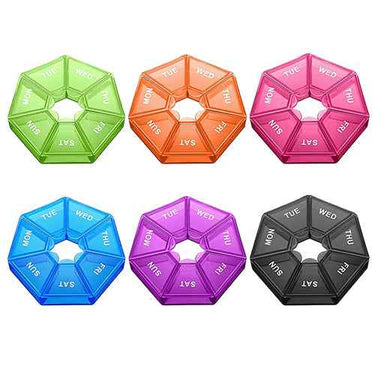
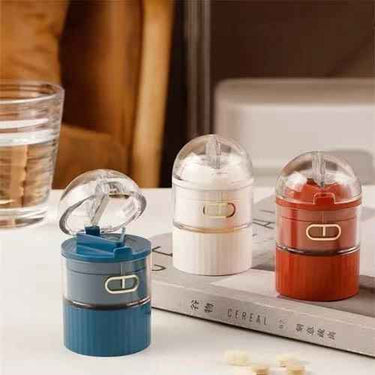
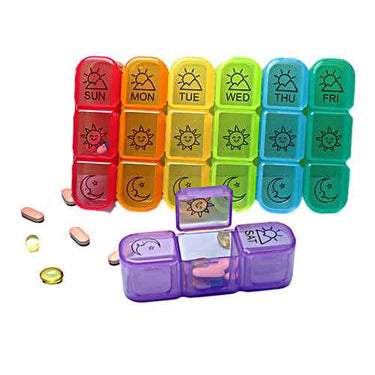

Purchasing a Custom Weekly Pill Organizer 21/28 Compartments BPA-Free Pill Box requires more than simply selecting a product. For brand procurement managers, the real challenge is building a complete decision-making framework that combines product knowledge, market understanding, cost control, and supplier evaluation.
A successful purchase decision depends on understanding what the product solves, how to evaluate suppliers, how to control quality, and how to ensure the final product supports long-term brand value.

A 21/28 compartment weekly pill organizer is a medication storage solution designed around a weekly medication schedule.
The 21-compartment version is designed for users who take medication three times a day (morning, afternoon, and evening), while the 28-compartment version supports four daily medication periods (morning, afternoon, evening, and bedtime).
These two configurations cover the most common medication management needs for chronic disease care, elderly medication routines, and daily health supplements.
The core functions of a BPA-Free pill box can be divided into three key areas:
1. Compartment Management
Each compartment represents a specific medication time slot. A transparent lid design allows users to quickly check remaining pills without opening every section individually.
For users who need to take multiple medications at different times, this clear organization system significantly reduces the risk of missed doses, incorrect medication, or repeated intake.
For brands, this function also represents the core selling point of a weekly medication organizer — helping users create a simpler and more reliable medication routine.
2. Secure Sealing and Protection
Medication stability can be significantly affected by moisture and environmental conditions.
A pill organizer with a silicone sealing ring helps block moisture, dust, and external contaminants, protecting the quality of stored tablets and supplements.
Professional suppliers may conduct durability testing, including thousands of opening and closing cycles, to ensure the sealing structure remains reliable during long-term daily use.
For brands developing a custom pill box, sealing performance is one of the key quality factors that directly affects user satisfaction.
3. Portable Storage Design
With a compact size of approximately 22.5 × 13.3 × 3.6 cm, a weekly pill organizer can be easily carried in handbags, backpacks, or travel luggage without taking up excessive space.
Some designs allow individual compartments to be removed separately, providing additional convenience for short trips, business travel, or outdoor activities.
This portable design makes the product suitable not only for medication management but also for vitamins, supplements, and daily health products.

Growing Market Demand
The global pill organizer market continues to expand steadily. With increasing aging populations, rising awareness of chronic disease management, and growing health-conscious lifestyles, pill organizers are evolving from simple accessories into essential daily healthcare products.
For brands, this creates an opportunity to enter a growing category that still offers room for differentiation.
A well-designed Custom Weekly Pill Organizer can become a practical product with strong repeat-use potential.
Solving Real User Problems
Brand procurement managers need to understand the actual challenges faced by end users:
Too many medication bottles at home
Complicated medication schedules
Difficulty carrying multiple medicines
Forgetting doses or taking incorrect amounts
A 21/28 compartment pill organizer solves these problems by organizing medication into a weekly schedule.
Users can prepare their medication once for the entire week, then simply follow the daily compartments when needed.
This design reduces mental workload and creates a more convenient medication management experience.
A Tool for Brand Differentiation
A pill box is a product users interact with every day.
Details such as material quality, surface texture, opening smoothness, printing clarity, and overall appearance directly influence users’ perception of the brand.
A professionally designed BPA-Free pill box with reliable quality can become an extension of a brand’s professional image and customer trust.
For healthcare brands, supplement companies, pharmacies, and wellness businesses, packaging is not only protection — it is also a daily brand touchpoint.
For brands moving from concept development to market launch, the following purchasing process can help reduce risks.
Step 1: Define Product Specifications and Custom Requirements
Before contacting suppliers, brands should confirm:
Compartment design (21 or 28 compartments)
Product colors
Logo placement
Printing methods (heat transfer, UV printing, silk screen printing, pad printing, etc.)
Packaging style
At this stage, procurement teams should clearly confirm which customization options are included in the standard quotation and which require additional charges.
For example, a custom weekly pill organizer may have different costs depending on logo printing methods, packaging design, and color customization.
Step 2: Select Suppliers and Verify Qualifications
Supplier evaluation should focus on the following areas:
Factory certifications such as ISO, BSCI, and GMP
SGS testing reports and FDA-related compliance requirements
Whether the supplier uses 100% new raw materials instead of recycled production scraps
Silicone sealing ring material quality and durability testing
Manufacturing experience and production capability
Procurement managers should also verify supplier information through reliable business databases and company records to reduce risks caused by inaccurate information.
Step 3: Request Samples and Conduct Internal Testing
Before placing a bulk order, brands should request samples and evaluate:
Opening and Closing Performance
Check whether the compartments open smoothly and remain secure after repeated use.
Sealing Performance
Place tablets inside and simulate transportation conditions to confirm whether leakage or accidental opening occurs.
Printing Durability
Test logo adhesion by wiping printed areas with a damp cloth to check whether the branding remains clear.
Product Safety and Finish Quality
Inspect whether edges are smooth, surfaces are free from defects, and there are no sharp areas or manufacturing marks.
Sample testing is an essential step before mass production of any custom BPA-free pill organizer.
Step 4: Confirm Quality Standards and Conduct Trial Production
Before full-scale manufacturing, brands should confirm:
Material specifications
Product quality standards
Packaging requirements
Inspection procedures
If necessary, a small trial production order can be arranged to verify product consistency before moving into large-scale manufacturing.
Step 5: Sign Quality Agreements and Monitor Production
Before official purchasing, brands should establish clear quality agreements with suppliers.
The agreement should define:
Quality standards
Inspection requirements
Responsibilities of both parties
Acceptance criteria
During production, suppliers should provide quality updates, and important production stages should be monitored through inspections.

Cost Structure
The purchasing cost of a custom weekly pill organizer 21/28 compartments mainly includes:
Product unit price (depending on material, design, and order quantity)
Mold cost (for customized structures or non-standard designs)
Custom color fees
Printing plate fees
Packaging design and production costs
Relationship Between Quantity and Pricing
Minimum order quantities usually range from hundreds to several thousand pieces depending on the supplier and customization requirements.
Small-volume orders, such as 100 pieces, are suitable for brands testing market demand.
Large-volume orders, such as 20,000+ pieces, generally provide better unit pricing and stronger cost advantages.
For growing brands, balancing MOQ requirements and inventory risks is an important purchasing decision.
Investment Return Perspective
A pill organizer is a high-frequency product that stays connected with users over time.
A reasonable purchasing strategy can create value through:
Brand Premium
Consumers are more willing to pay for products with better design, quality materials, and professional appearance.
Customer Loyalty
A reliable daily-use product improves user experience and strengthens brand trust.
Channel Expansion
Products meeting relevant quality requirements have better opportunities to enter pharmacies, healthcare channels, retail stores, and online marketplaces.
Cost Optimization Suggestions
Without affecting core product functions, brands can reduce costs through:
Choosing standard colors instead of customized colors
Simplifying packaging structures
Increasing order quantities to obtain better pricing
Establishing annual supply agreements with reliable manufacturers
The key criteria for selecting a custom pill organizer manufacturer include:
Certification Capability
Important supplier qualifications include:
ISO certification
BSCI certification
GMP-related production standards
SGS testing reports
FDA-related material compliance
These qualifications help determine whether products can enter professional healthcare, pharmacy, and retail channels.
Production Capacity and Lead Time
Stable production capacity and delivery schedules are critical for brand planning.
Typical production lead times may vary depending on factory location, customization complexity, and order quantity.
Brands should communicate expected launch schedules with suppliers in advance to avoid inventory delays.
Customization Capability
A professional supplier should support:
Logo customization
Heat transfer printing
UV printing
Silk screen printing
Pad printing
Customized packaging solutions
Flexible MOQ options
The supplier’s ability to support different customization requirements directly affects brand competitiveness.
Quality Control System
A reliable manufacturer should have:
100% new material usage
Incoming material inspection
Production process inspection
Final product inspection
Product durability testing
These systems ensure consistent quality for every batch.

Brands can explore suppliers through:
Visit the PINES website to view product collections, customization capabilities, material information, and previous custom projects. Submit an inquiry to receive product catalogs and quotations.
B2B Platforms
Platforms such as Alibaba can help brands discover manufacturers. However, certification information, customer feedback, and factory capabilities should be carefully reviewed.
Industry Trade Shows
Healthcare, packaging, and gift industry exhibitions provide opportunities to communicate directly with manufacturers and evaluate suppliers face-to-face.
Industry Associations
Industry associations and purchasing networks can also provide recommended supplier resources.
A professional sourcing process usually includes:
1. Research supplier background and product range
2. Select 3–5 potential suppliers
3. Request samples for testing
4. Compare quality, pricing, customization ability, and service
5. Choose a long-term manufacturing partner
Choosing a supplier for a Custom Weekly Pill Organizer 21/28 Compartments BPA-Free Pill Box is not simply about finding the lowest price. It is about selecting a reliable partner who can support product quality, brand development, and long-term market growth.
PINES has more than 20 years of experience in customized packaging manufacturing and specializes in pill organizers, healthcare accessories, and packaging solutions.
From material selection and sealing structures to printing technology and production management, PINES provides professional customization services to help brands create reliable and market-ready products.
Contact PINES through our official website today to receive product catalogs, customization options, and detailed quotations.
Subscribe to our industry updates for more insights into pill organizer packaging trends, healthcare product sourcing, and supplier selection strategies.

