


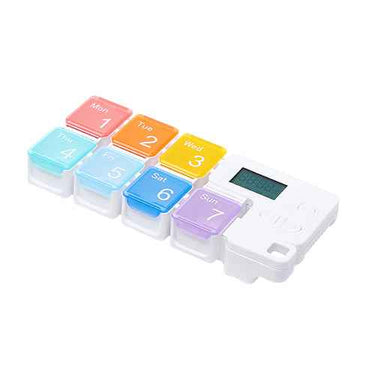
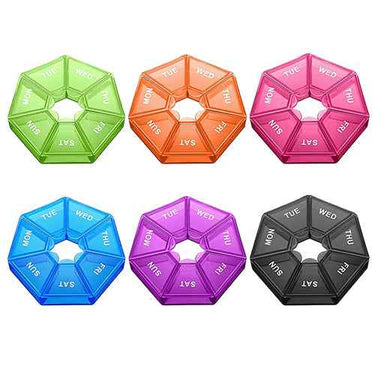
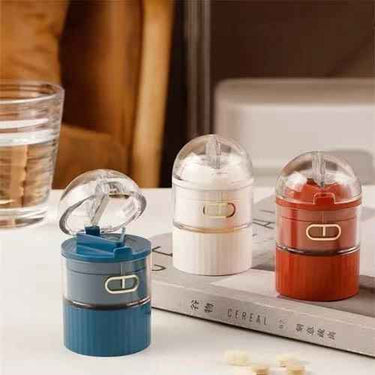
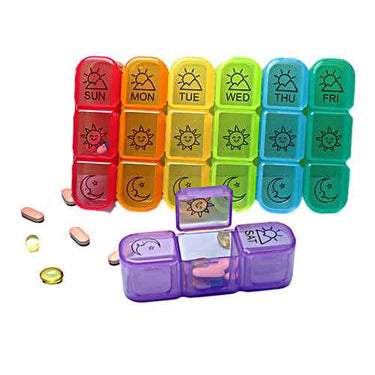
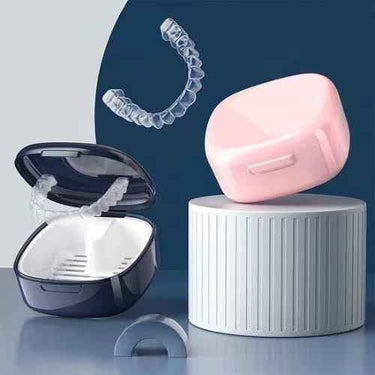

First-time sourcing of a pill crusher (medicine pill crusher) and matching pill organizer/pill box often leads buyers to focus only on whether the device “can crush tablets” or whether the compartments are “enough.”
However, many discover too late that metal parts develop rust spots, plastic edges have sharp burrs, or logistics costs exceed the product's unit price once the goods arrive at the warehouse.
Although these products appear structurally simple, they involve multiple variables across material engineering, mold precision, and international logistics. Below are seven procurement checkpoints distilled from real sourcing experience—especially relevant to buyers dealing with wholesale pill crushers, medical-grade packaging, and pharmacy accessory supply chains (including brands such as Pines).

The core functional components of a pill crusher—blades, pressing rods, and gear contact surfaces—are typically made of metal. This is also where suppliers most commonly cut corners.
The term “stainless steel” is often used loosely. 304 medical-grade stainless steel is the baseline requirement for food-contact and medical-use applications. However, actual production may substitute it with 201 stainless steel or even carbon steel with surface coating.
The difference becomes critical under long-term contact with powdered medication. Weak acid or alkaline drug residues may damage the passive layer, leading to gradual pitting corrosion. These rust particles may not be visible immediately but can contaminate crushed powder and potentially enter the patient’s system.
Another key point is the connection between metal components and plastic handles. If the metal pressing rod is simply inserted into an injection-molded part without reinforcement ribs or secondary overmolding, long-term force may cause loosening or handle failure.
Pre-order requirement: Request third-party material certification (e.g., an SGS test report) and confirm salt spray testing results. A minimum of 48 hours of neutral salt spray resistance without corrosion is generally considered acceptable.
End users of pill crushers and pill boxes are often elderly patients, caregivers, or post-operative users. This makes mechanical safety more important than aesthetics.
Two common risks include:
Sharp edges in grinding chambers:
Some molds prioritize tight visual seams, resulting in near-right-angle edges at chamber openings. Repeated contact during cleaning may cause finger abrasion or cuts.
Pinch hazards during compression:
Lever or rotary crushers with gaps smaller than 5mm between moving parts may pose finger pinch risks. While regulations vary globally, buyers should still confirm whether anti-pinch spacing is designed into the product.
For pill boxes, latch design also matters. Over-tight closures make it difficult for elderly users to open compartments, while overly loose designs risk accidental opening. Ideally, lids should open with light pressure but remain secure when inverted.
The value of a pill crusher is not just “breaking tablets,” but achieving consistent particle size.
For patients requiring tube feeding or those with swallowing difficulties, particle uniformity directly affects suspension stability and drug dissolution rates.
Manual crushing often produces uneven particles—larger fragments may block feeding tubes, while fine powder may dissolve prematurely and affect pharmacokinetics.
Well-designed crushers use spiral compression or gear-based structures to ensure relatively uniform powder output.
Procurement recommendation: Request comparative crushing results for different tablet hardness types (e.g., aspirin, vitamins, sustained-release tablets). If unavailable, test samples directly and check for uncrushed residues at the chamber bottom.

Cross-contamination is a real concern for patients taking multiple medications daily.
Residual powder trapped in threaded gaps may mix with subsequent drugs, potentially affecting dosage accuracy.
Although integrated designs look cleaner, they are harder to clean thoroughly. Modular, fully detachable pill crushers are significantly more practical in real caregiving environments.
Key verification point: Ensure grinding chambers, sealing rings, and pressing rods can be disassembled and withstand hot water cleaning above 70°C without deformation.
For a pill organizer/pill box, functionality is not just compartmentalization but moisture control.
Moisture exposure can cause tablets to disintegrate, discolor, or degrade active ingredients. For patients who pre-pack medication for a week, sealing performance directly impacts treatment reliability.
Critical sealing factors include:
Silicone gasket material quality
Lid closure pressure consistency
Hinge area sealing integrity
Food-grade silicone typically has a lifespan of 2–3 years. Buyers should ensure compliance with FDA or LFGB food-contact standards.
Simple test method: Place desiccant inside the pill box and submerge in room-temperature water for 1 hour. Check for internal moisture intrusion.
A common sourcing issue is: approved samples, inconsistent mass production.
Typical problems include color deviation, burrs on injection parts, or dimensional shrinkage.
For PP and ABS materials, normal shrinkage ranges between 1.5%–2%. However, critical dimensions such as grinding chamber fit and compartment alignment require tighter tolerances.
Recommended procurement controls:
Signed and sealed production samples as reference
Defined tolerance levels (±0.3mm for critical parts)
AQL inspection standards (AQL 2.5 major, AQL 4.0 minor defects)
A pilot production run is strongly recommended before full-scale order release.

Although pill crushers and pill boxes are lightweight, packaging design often creates high volume-to-weight ratios.
International shipping uses volumetric weight:
Length × Width × Height ÷ 6000
This means freight cost may rise from 15% to over 30% of total product cost.
Cost optimization strategies:
Use stackable pill box designs to reduce container volume
Optimize carton dimensions for standard pallets (120×100cm)
Evaluate Incoterms carefully (EXW vs FOB vs CIF)
EXW pricing may look cheaper initially, but total landed cost often exceeds FOB once inland logistics and customs fees are included.
Buyers often care more about “when goods arrive at the warehouse” rather than shipment departure date.
Typical timeline for EU/US orders:
Production: 7–10 days (up to 15–20 days in peak season)
Domestic logistics & customs: 5–7 days total
Sea freight: 18–38 days depending on destination
Destination clearance & delivery: 5–10 days (may extend during peak congestion periods)
Total lead time:
West Coast US: ~55–65 days
East Coast US: ~65–75 days
Europe: ~70–85 days
For suppliers, including Pines, quoting “estimated time” rather than fixed delivery dates is standard industry practice due to port congestion variability.

These seven checkpoints cover the major risk variables from material selection to logistics execution.
For first-time buyers of pill crushers and pill organizers, the most reliable strategy is:
Start with sample validation across all functional tests
Proceed with pilot batch production
Scale only after confirming consistency in quality and packaging
In supply chain procurement, slower validation often prevents far more costly downstream failures.

