





When it comes to invisible aligners, most people think first of the clear tray itself. You spend thousands on these aligners, wear them 22 hours a day, change them on schedule, and expect a perfectly aligned smile. But few consider one crucial question: where do you put your aligners when you take them out to eat?
Wrap them in a napkin on the table—and risk a server throwing them away. Stuff them into your pocket, only to sit on them and deform them. Toss them in your bag with keys, causing scratches, wear, and bacterial growth. These situations happen every day. Once an aligner is damaged, lost, or warped, the consequences are serious: prolonged treatment, costly remakes, or weeks of delay.
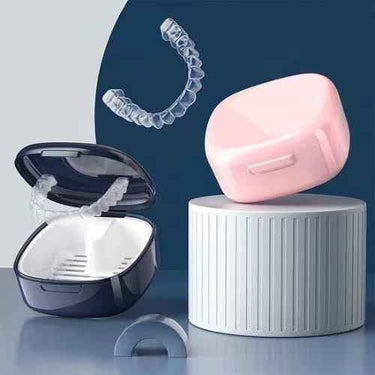
This is exactly why aligner cases exist. They are not accessories, freebies, or optional add-ons—they are essential tools that ensure your orthodontic plan proceeds smoothly and on schedule.
The first aligner cases were nothing more than simple plastic boxes. Aligner manufacturers provided a transparent or semi-transparent snap-top case to fulfill the most basic need: “somewhere to put it.” That was it.
Users quickly discovered the limitations: poor ventilation caused odors after rinsing, weak seals allowed aligners to fall out in a bag, and hard materials led to scratches from movement inside the box. Clearly, not just any case would do.
Phase 2: Ventilated aligner cases appeared. Small air holes allowed moisture to evaporate, reducing bacterial growth. Internal slots kept aligners secure. Materials upgraded to food-grade PP or silicone for safety.

Phase 3 (current mainstream): Designs now address real-life usage scenarios. Features include mirrors for on-the-go placement, moisture control with desiccants or special coatings, ultra-slim portable versions that fit in jeans pockets, and built-in UV sterilization that disinfects automatically.
This progression shows one thing: an aligner case is not just a container—it solves concrete, daily problems for users.
1. Protects Your Aligners:
Snap the aligners into a secure case, and even if it falls or get compressed in a bag, they remain safe and clean.
2. Maintains Hygiene:
Ventilated or antibacterial materials prevent bacterial growth. A clean, dry aligner is essential for your oral health.
3. Prevents Loss:
A dedicated case creates a habit: take out your aligners, put them in the case. No more lost aligners at restaurants or in pockets.
4. Prevents Deformation:
High temperatures can warp aligners. A quality case with insulation keeps them safe from heat or accidental damage.
5. Convenient Portability:
Whether commuting, traveling, or dining out, a portable case ensures that aligners have a safe, accessible home. Convenience encourages compliance.

It may sound exaggerated, but it’s true. Successful treatment depends on:
1. The precision of the aligners themselves
2. Patient compliance—including wearing, cleaning, and proper storage
People focus on wearing and cleaning, but often neglect proper storage. The cost of ignoring this is high: a single damaged aligner can delay treatment weeks, reduce effectiveness, or even require a complete remake.
A good aligner case costs only tens to a hundred dollars—far less than an aligner or the full treatment—but it protects the entire investment. In terms of cost-benefit, it’s one of the most valuable components of your treatment plan.
1. Basic Ventilated: Simple plastic or silicone with airflow holes and slots. Affordable and practical, but with minimal additional features.
2. Portable Mini: Ultra-thin, often card-sized, sometimes with a keychain or strap. Great for on-the-go use, though internal space is limited.
3. Multifunction Care: Features mirrors, desiccants, humidity display, or UV sterilization. Ideal for home or travel. Larger but comprehensive.

4. Professional Sterilization: Built-in UV light and drying system. Can fully disinfect aligners daily. Expensive and requires charging, but it offers maximum hygiene.
Many patients combine cases: a multifunction case at home, a portable one for daily outings.
Even the best case can’t fix everything. Aligners still face challenges:
1. Misfit due to dental movement
2. Complex cases needing extended treatment or attachments
3. Difficult placement/removal for back teeth
4. Compliance with retainers post-treatment
5. Daily wear restrictions (e.g., food or coffee timing)
A case helps manage your aligners, but it doesn’t replace professional guidance or patient responsibility.

Selecting an aligner system can be complex: multiple brands, case complexities, varied treatment costs, and differing clinician expertise.
Two simple rules:
1. Trust your orthodontist, not just the brand. A skilled doctor maximizes results.
2. Consider the accessories alongside the aligners—cases, removal tools, and cleaning products are not optional; they’re essential for smooth treatment.
PINES designs aligner cases with these insights in mind: ventilation, portability, secure slots, and durability. These aren’t features for marketing—they solve real problems that can otherwise delay treatment for months.

