




As competition in the clear aligner market continues to intensify, clinic owners and managers are facing a practical question: how to optimize consumable procurement costs while maintaining treatment quality.
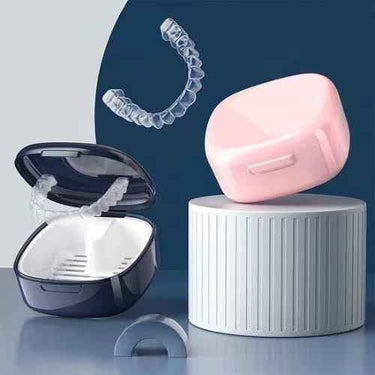
Bulk purchasing of clear aligner cases—commonly referred to as aligner cases wholesale—is increasingly becoming a core strategy for clinics looking to strengthen their competitiveness.
This procurement model is not simply about “buying more at a discount.” In practice, it involves a broader operational framework that affects cash flow management, inventory turnover, and patient compliance, all of which play a critical role in overall clinic performance.
Reduced Unit Costs and Greater Pricing Flexibility
Lower unit cost is the most direct incentive behind wholesale purchasing. For established clinics, aligner-related consumables account for a significant portion of total treatment expenses. When clinics adopt an aligner case wholesale model and place bulk orders, suppliers benefit from reduced costs in R&D amortization, manufacturing efficiency, and logistics.
These savings are reflected in more favorable pricing for clinics. As a result, clinics gain greater flexibility when setting treatment fees—either by increasing profit margins or by offering more competitive pricing to cost-sensitive patients. In both cases, wholesale purchasing enhances a clinic’s ability to remain competitive in a crowded market.

Sufficient Inventory and Uninterrupted Treatment Progress
Adequate inventory ensures that clinical workflows are no longer constrained by supply chain lead times. Under traditional on-demand ordering models, there is always a waiting period between case submission and aligner delivery, even with expedited production.
With aligner cases wholesale, clinics can keep commonly used aligner cases in stock, allowing practitioners to provide the next treatment stage immediately as patients progress. This reduces the risk of treatment interruptions caused by logistics delays. For multi-location or cross-regional clinic groups, centralized purchasing combined with decentralized inventory storage significantly improves responsiveness and enhances the overall patient experience.
Improved Operational Efficiency
The benefits of wholesale purchasing extend beyond cost savings. Financial workflows are simplified, shifting from frequent monthly purchases to quarterly or annual settlements, which substantially reduces accounting and reconciliation workloads.
In addition, front-desk and clinical support staff no longer need to manage frequent deliveries, inspections, and inventory registrations. This allows them to focus more on patient communication and care coordination. For clinics with a stable monthly treatment volume, the operational efficiency gained from wholesale procurement often delivers value that exceeds the visible cost discounts.

Despite its advantages, aligner cases wholesale is not suitable for every clinic, and potential risks must be carefully evaluated.
Inventory Risk and Financial Exposure
Inventory accumulation is the most critical concern. Orthodontic treatment carries inherent uncertainty—patients may discontinue treatment due to relocation, financial pressure, or poor compliance. If a clinic has already allocated the full-course aligner cost from bulk inventory without collecting fees in advance, the resulting loss directly impacts cash flow.
More complex situations arise when treatment plans require mid-course adjustments or conversion to fixed orthodontics, rendering previously purchased customized aligners unusable. Clinics adopting wholesale purchasing must therefore implement strict prepayment policies and effective treatment progress monitoring to ensure inventory usage aligns with actual clinical delivery.
Requirements for Case Structure Stability
Wholesale procurement also assumes a relatively stable case mix. Clinics that primarily handle straightforward cases with standardized treatment paths face lower inventory risk. However, clinics treating a higher proportion of complex cases may encounter greater challenges in forecasting aligner quantities and managing inventory efficiently.
Overall, aligner cases wholesale is best suited for clinics with predictable case volumes and strong patient compliance management, where cost control and efficiency gains can be fully realized.

Industry data shows that the global clear aligner market is growing at a double-digit compound annual rate, with market size projected to reach nearly USD 13.4 billion by 2031. Alongside this growth, the aligner cases wholesale model is undergoing structural changes.
Increasing Influence of DSOs and Large Clinic Groups
Dental Service Organizations (DSOs) and large clinic networks continue to strengthen their bargaining power through centralized procurement. By consolidating order volumes, these organizations secure more competitive pricing and more flexible payment terms. In response, suppliers are redesigning wholesale systems and offering tiered pricing structures tailored to different customer sizes.
Blurring Boundaries Between Bulk Inventory and On-Demand Production
The distinction between bulk stocking and on-demand manufacturing is becoming less clear. Some suppliers now offer hybrid models in which clinics commit to an annual purchase volume while receiving shipments based on monthly demand.
This “framework agreement plus rolling delivery” approach preserves wholesale pricing advantages while reducing inventory pressure, and it is gradually becoming a new standard in aligner cases wholesale.
Growth of White-Label and OEM Partnerships
White-label collaboration is another accelerating trend. Increasingly, DSOs and large clinics are launching proprietary clear aligner brands, effectively extending wholesale purchasing from product procurement to manufacturing capacity acquisition.
Through OEM partnerships, clinic groups can obtain customized products at lower marginal costs while strengthening brand differentiation. Over the next five years, this trend is expected to reshape competition across the aligner supply chain.
By partnering with PINES, clinics gain access to professional clear aligner manufacturing support tailored to the Chinese market. As a trusted aligner manufacturer, PINES is committed to providing flexible and reliable aligner cases wholesale solutions that help clinic partners control costs, streamline operations, and remain competitive in a rapidly expanding market.

