



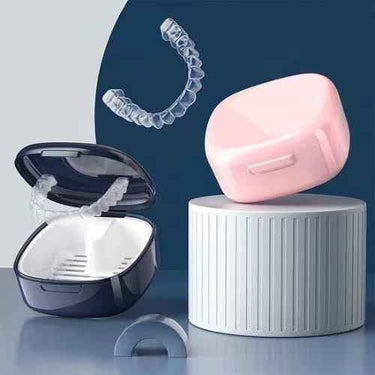
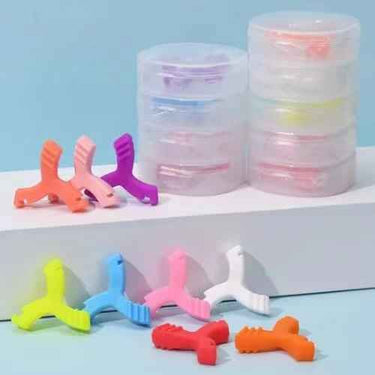

The creation of a clear aligner involves far more than producing a transparent orthodontic tray. The professional case that stores and protects the aligner is itself a precision-engineered product. As a dental aligner case manufacturer, the manufacturing process integrates digital design with advanced engineering, and every stage directly affects product quality and user experience.
Manufacturing begins with a comprehensive three-dimensional digital design. Based on the patient’s dental model and treatment stages, designers not only define the geometry of the aligner but also develop a corresponding case structure.
The case design must precisely calculate internal space to securely hold the aligner, incorporate an opening mechanism that allows easy access, and account for portability and hygiene during daily use. The digital model created at this stage directly guides all subsequent manufacturing processes.

In aligner case manufacturing, 3D printing is primarily applied in two key areas. First, it is used to produce functional prototypes to validate opening mechanisms, retention structures, and ergonomic performance. Second, it supports the creation of high-precision molds for mass production.
By using industrial-grade technologies such as photopolymerization or powder bed fusion, 3D printing enables complex internal geometries and fine surface details that are difficult to achieve through traditional machining methods.
The main body of the aligner case is typically produced through thermoforming. Medical-grade polymer sheets are heated under precisely controlled temperatures and formed over molds using air pressure or vacuum suction. This process shapes the case lid, base, and internal retention structures.
Thermoforming enables efficient production of lightweight, durable, and cost-effective components while maintaining high consistency. Material selection typically focuses on impact-resistant and chemically stable medical plastics, ensuring that the case does not deform or crack during daily use.

Laser technology plays a critical role in aligner case manufacturing. Precision laser cutting is used to finalize the outer contours of the case, ensuring smooth, burr-free edges. Laser marking is applied to add brand logos, usage instructions, or customized information, creating permanent markings that do not wear off with repeated handling.
For premium case designs, laser processing can also be used to create microstructures that enhance surface texture or enable specific functional properties.
After forming, case components undergo systematic post-processing. Mechanical trimming removes excess material, followed by vibratory or chemical polishing to eliminate sharp edges and surface imperfections. The result is a smooth surface and seamless opening and closing performance.
This stage directly influences tactile quality and long-term durability. Proper finishing helps prevent wear, deformation, or breakage during extended use.
Each aligner case undergoes rigorous multi-dimensional testing. Dimensional inspections ensure precise compatibility with the aligner. Opening and closing cycle tests simulate daily use to verify mechanical durability. Material safety tests confirm compliance with medical standards, while visual inspections eliminate cosmetic defects.
For certain high-end products, additional testing may include verification of antibacterial coating performance or other specialized evaluations.

After passing quality inspection, cases are cleaned and packaged together with the corresponding aligners. Medical-grade packaging materials with antibacterial and moisture-resistant properties are used to maintain cleanliness during storage and transportation.
Packaging design balances product protection with ease of clinical distribution and clear patient guidance, ensuring a smooth experience from delivery to daily use.
Modern dental aligner case manufacturers actively integrate sustainability into their production processes.
Material Selection and Optimization
Priority is given to recyclable medical-grade plastics, with designs optimized to reduce material usage without compromising functionality. Some leading manufacturers have begun adopting bio-based plastics to reduce dependence on fossil-derived materials.
Waste Reduction in Manufacturing
Digital workflows and automated production lines minimize material waste. Processes such as laser cutting inherently generate less scrap compared with conventional manufacturing methods.
Energy and Water Management
Manufacturing facilities implement energy-efficient systems and closed-loop cooling water circulation to significantly reduce resource consumption. Some factories have already introduced solar-powered production stages.
Product Lifecycle Design
Durable case structures are designed for long-term use, reducing replacement frequency. Recycling programs are being explored to repurpose used cases into other plastic products.
Minimalist, recyclable packaging solutions are adopted to avoid excessive packaging while maintaining hygiene and safety standards.
From digital design to the finished product, the manufacturing of clear aligner cases reflects the precision and reliability of modern medical manufacturing. Technical decisions and strict process control at every stage ensure that the final product meets both medical standards and daily usability requirements.
As sustainability becomes a global priority, responsible manufacturers are embedding environmental considerations into every aspect of production, from material selection to energy usage, thereby reducing the industry’s environmental footprint.
Building on these practices, Pines continues to optimize its manufacturing processes, delivering clear aligner case solutions that combine reliable quality with environmental responsibility for customers worldwide.

