


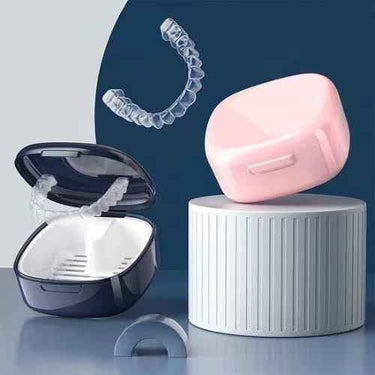


In daily life, properly managing medications or dietary supplements is essential.
A well-designed pill box made from safe materials does more than help you stay on schedule—it also protects the purity and effectiveness of what you take.
With so many options labeled as a food-grade pill box on the market, making an informed choice can be challenging.
This guide walks you through the key considerations to help you find the option that best fits your real-life needs.

The first step in choosing a pill box is understanding how you will use it.
Will it be primarily for home storage, or do you need a solution that is easy to carry when you are on the go?
For home use, larger pill boxes with clearly defined compartments are often more convenient.
If portability is a priority, look for a compact, lightweight design with a sturdy structure that can withstand movement inside a bag or backpack.
If you take multiple medications daily or manage doses for family members such as seniors or children, comprehensive functionality becomes especially important.
Tablets and capsules vary widely in size and shape.
Compartments that are too small may not accommodate larger supplements, while oversized compartments allow pills to move around, increasing the risk of breakage and reducing portability.
Ideally, each compartment should comfortably hold the largest daily or weekly dose you require, with a small amount of extra space.
For medications with unusual shapes, measuring in advance or choosing a modular design with multiple compartment sizes can significantly improve usability.

The opening mechanism of a pill box directly affects both user experience and sealing performance.
Flip-top lids are quick and convenient, but the latch must be secure to prevent accidental opening inside a bag.
Twist-lock or sliding mechanisms generally provide better moisture resistance and help keep contents dry, though they may require more hand strength or dexterity.
Whenever possible, test the opening and closing action to ensure it feels smooth, reliable, and comfortable to use.
The internal layout reflects how your medication routine is organized.
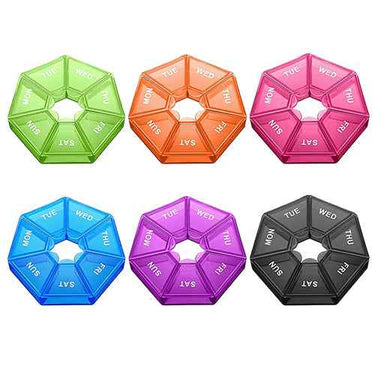
Common designs include weekly formats with 7, 14, or 28 compartments, which are well-suited for consistent daily schedules.
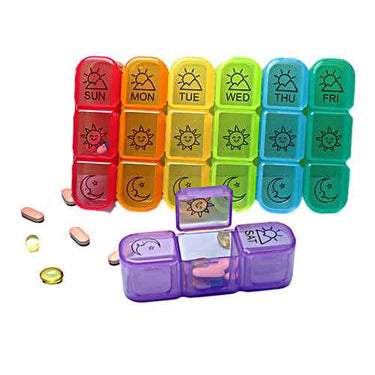
More detailed pill boxes divide each day into morning, noon, and evening sections, making them essential for users who must take medication at specific times.
Choose a layout that matches your dosing frequency to avoid unnecessary complexity or insufficient functionality.

Safety is the foundation of any food-grade pill box.
These products are typically made from materials such as PP (polypropylene) or PE (polyethylene), which meet recognized safety standards and are non-toxic, odorless, and chemically stable.
High-quality materials should also offer durability and slight flexibility to withstand daily use and accidental drops.
Beyond safety, appearance, and color reflect personal preference.
Transparent designs allow for quick visual checks of remaining pills, while opaque or matte finishes offer greater privacy and a more refined aesthetic.
A clear labeling system significantly reduces the risk of incorrect dosing.
Whether it includes writable surfaces, pre-printed day and time indicators, or slots for custom labels, effective labeling helps ensure accurate identification.
For users who rely on caregivers or family members for assistance, clear and highly visible labels are especially important.

The overall shape of a pill box influences both portability and storage convenience.
Rectangular or square designs stack easily and fit well in drawers or cabinets.
Rounded edges or slim, flat profiles are better suited for pockets, purses, or small bags.
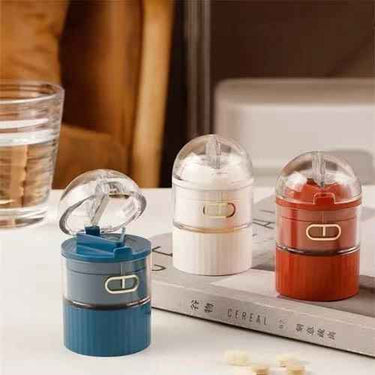
Some innovative designs use folding or capsule-style structures to further reduce space requirements.
Consider the type of bag or storage space you use most often and choose a shape that integrates seamlessly into your routine.
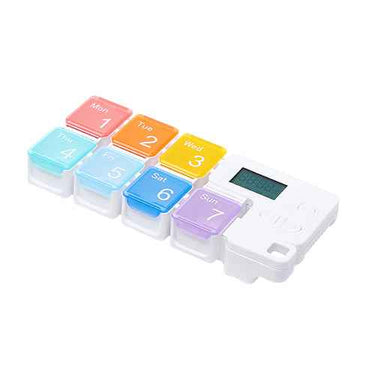
Timer and Reminder Functions
For users who frequently forget doses, pill boxes with built-in timers or audible reminders can be highly effective.
When evaluating these features, consider battery life, sound volume, and whether the added functionality increases operational complexity.
Recyclability
As environmental awareness continues to grow, recyclability has become an important factor.
Choosing a pill box made from a single, clearly labeled recyclable material supports responsible disposal and easier waste sorting.

Choosing the right food-grade pill box ultimately involves aligning your personal habits and medication needs with thoughtful product design.
There is no universally “best” option—only the one that best suits your specific situation.
By prioritizing factors such as safety, durability, portability, and ease of use, you can make a confident and practical decision.
Users who value high material standards, durability, and user-centered design may naturally gravitate toward brands like Pines, which emphasize craftsmanship and everyday functionality.
We hope this guide helps you make a clear and informed choice and find a pill box you can trust to support your daily health routine with confidence and ease.

