


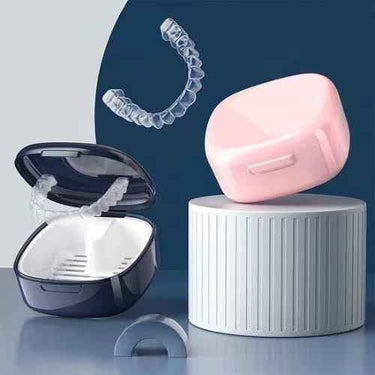


An aesthetically pleasing, custom-designed round pill box makes you more likely to stick to your medication or supplement routine. When your organizer feels unique and personal, it becomes part of your lifestyle rather than just another tool.
That may sound like marketing language, but it reflects a very real truth. Anything you use every day—if it looks good and feels intuitive—is far less likely to be ignored. A pill organizer is one of the clearest examples.
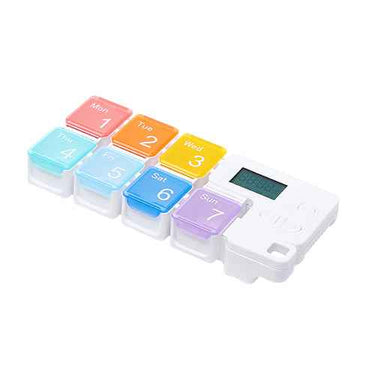
Traditional pill boxes are usually plastic, transparent, and grid-based—functional, but clinical. They look like something handed out in a hospital, not something you’d want to carry daily. But when a pill box is designed to resemble a donut, an orange slice, or includes a hidden mirror inside, the experience changes entirely.
This is where the round pill box stands out. Its shape is naturally softer and more adaptable, making it easier to transform into something visually engaging and lifestyle-friendly.
Most people only think seriously about pill organizers when they actually need one. Younger users may buy a simple travel case, while older users often prioritize multi-compartment designs for daily medication. But one important factor is often overlooked: this is something you interact with every day. Its design directly affects your habits.
A round pill box offers a practical advantage in how it opens. A rotating mechanism is more intuitive than flip lids or push buttons, and it can be operated with one hand—especially helpful for users with limited dexterity.
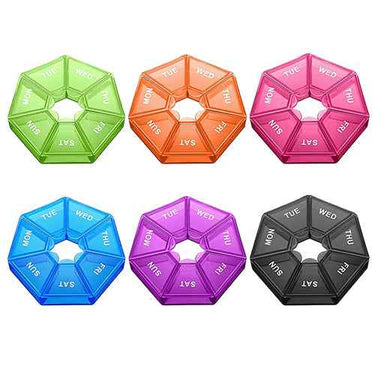
Its circular layout also naturally supports weekly organization. Seven compartments arranged in a circle provide a clear visual structure.
Choosing a pill organizer is ultimately about defining your relationship with your medication. Are you managing it as a chore or integrating it into your daily routine?

Medication mistakes can be minor or serious. Taking an extra vitamin may not matter, but mixing incompatible medications or forgetting a dose can have real consequences.
A round pill box has a structural advantage here. Its rotating design exposes only one compartment at a time, unlike traditional rectangular organizers, which show all compartments simultaneously. This reduces the chance of selecting the wrong section.
You can preload a full week’s medication and rotate one step each day. The process becomes clear and consistent.
Design also plays a role. A visually distinctive pill box—such as one shaped like an orange slice—creates a stronger mental association. Seeing it on your desk can trigger the thought: “I haven’t taken today’s dose yet.”
Adherence is a technical term, but in simple terms, it means whether you consistently take what you’re supposed to take.
Most people start strong with a new medication or supplement routine, then gradually lose consistency. A pill organizer acts as a visual cue.
Where you place it matters. Next to your toothbrush, coffee machine, or phone charger—places you interact with daily.
And design matters just as much. A pill box that looks like a donut is more likely to stay visible on your desk. A generic plastic box gets hidden in a drawer. And once it’s out of sight, it’s effectively out of use.

Safety works on multiple levels.
First, child resistance. Many pill boxes are easy to open. A round pill box with a twist-lock mechanism requires both alignment and force, creating a more secure barrier for children.
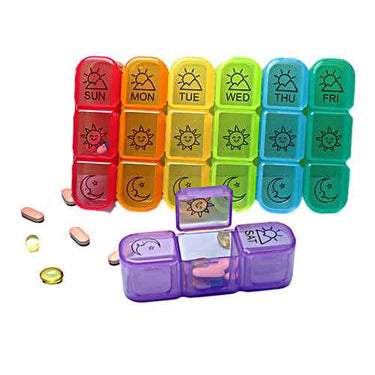
Second, preventing confusion. Traditional grid layouts can lead to mistakes, especially in low light. A rotating round pill box physically limits access to one compartment at a time.
Third, protection from moisture and contamination. Circular designs often allow for better sealing, especially when combined with silicone rings. Fewer edges also mean fewer places for dust to accumulate.
These details may seem small, but medication safety is built on precisely these kinds of details.
For supplement or pharmaceutical brands, a custom round pill box is an underused branding tool.
Standard pill organizers are disposable in perception. A well-designed one becomes something users keep and reuse. Every time they open or refill it, they interact with your brand.
The round shape also offers excellent surface area for branding—both on the lid and the sides. It photographs well and is naturally shareable on social media.
More importantly, a distinctive design sparks curiosity. When someone asks, “Where did you get that?”, you’ve created organic word-of-mouth exposure.

Travel pill organizers face three main issues: poor sealing, awkward sizing, and inconvenience at security checks.
A round pill box addresses these effectively. Its compact, flat form can fit easily into a pocket or side compartment. A diameter of around 8 cm with a slim profile balances capacity and portability.
Rotating compartments eliminates the need for multiple small bags. If the design includes a built-in mirror, it adds a subtle but practical benefit during use.
Taking medication is about health, but it shouldn’t make you feel like a patient.
A pill box shaped like fruit, a dessert, or a compact mirror sends a different message: you’re taking care of yourself.
This psychological shift matters. A pleasant daily interaction reinforces consistency over time.
A round pill box naturally supports this approach. Its form feels closer to everyday objects than medical equipment, making it easier to integrate into daily life.
Its recognizable shape also makes it easier to identify during airport checks, often reducing the need for manual inspection.
Round pill boxes offer more customization than most people expect.
A typical three-layer structure—lid, rotating compartment layer, and base—allows for multiple design variations.
Size can range from compact travel versions to larger weekly organizers. Surface finishes include matte, glossy, frosted, or soft-touch coatings.
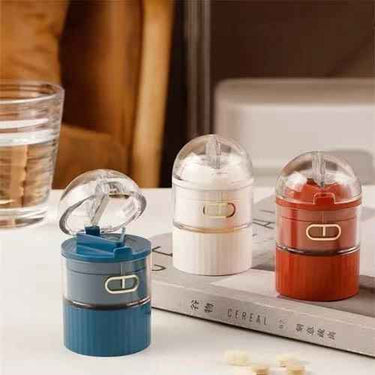
Structural options include waterproof sealing, adjustable compartment counts, rotation resistance levels, built-in mirrors, and integrated pill cutters.
The key is not to add everything, but to match features to real usage scenarios.

Branding should go beyond placing a logo.
A more refined approach is translating brand elements into design language. Colors, textures, and patterns can reflect brand identity without being overt.
A nature-focused brand might use wood-fiber materials. A youthful brand might explore playful shapes like fruit or desserts.
The goal is recognition without relying solely on logos.
Design is not decorative—it is the core differentiator.
Round pill box design directions generally fall into four categories.
First, nature-inspired designs, such as citrus or avocado slices.
Second, food-inspired designs like donuts or macarons.
Third, minimalist styles use clean lines and subtle textures.
Fourth, vintage-inspired designs with enamel or embossed detailing.
Regardless of style, the principle remains the same: it should feel natural to place on a desk or carry in public.
Function upgrades should add real value.
A built-in mirror is one of the most effective additions—low cost, high usability.
Other options include integrated pill cutters, simple tracking dials, humidity indicators, and anti-slip bases.
Each feature should answer one question: would a user pay extra for this? If not, it’s unnecessary.

Material choice affects both durability and user experience.
ABS is cost-effective and versatile. PC offers higher transparency and strength. Silicone works well for seals but attracts dust. Metal provides a premium feel and durability, but increases weight and cost.
Wood-fiber composites offer a sustainable and warm aesthetic but require careful moisture management.
Manufacturing details—such as rotation durability and sealing performance—ultimately determine long-term usability.
A round pill box may seem like a small object, but it connects to larger themes: safety, habit formation, branding, and lifestyle design.
Its strength lies in versatility. It can resemble a fruit slice, a dessert, a mirror, or a personal accessory—far removed from the image of medical equipment.
There are trade-offs. Circular layouts are less space-efficient, and rotating mechanisms require higher production precision. But these challenges can be addressed through thoughtful design and engineering.
The key is clarity of purpose. Whether you prioritize aesthetics, durability, or portability, the right design will follow.
When your pill box looks like something you enjoy using—when you’re comfortable placing it on your desk instead of hiding it away—it stops being just a reminder. It becomes part of how you take care of yourself.
That’s the perspective behind PINES: not just creating a round pill box, but designing a custom pill organizer that people genuinely want to use every day.

