


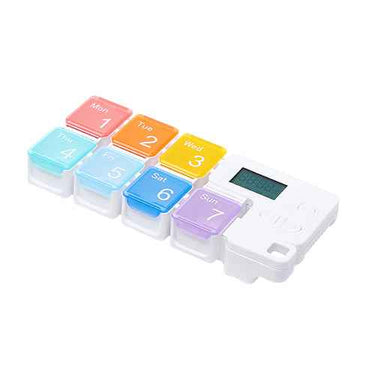
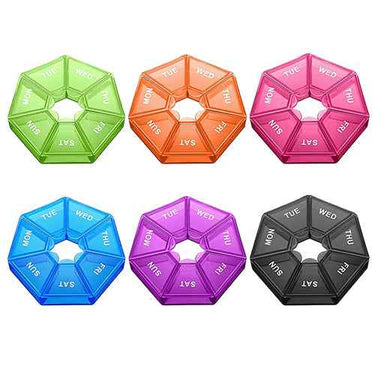
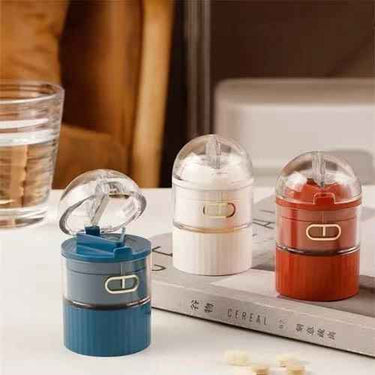
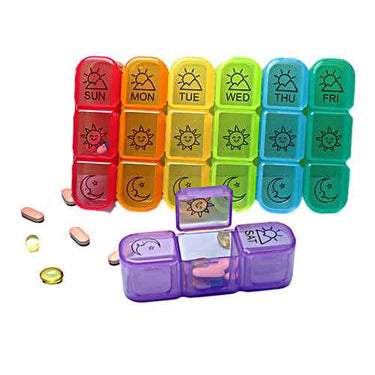



Remembering to take medication on time can be challenging for anyone. When you or a loved one is managing multiple chronic conditions or experiencing early cognitive decline, relying solely on memory can pose significant health risks. In recent years, the emergence of the smart pillbox and automatic pill dispenser has redefined the safety standards of medication management.
However, with products on the market ranging from inexpensive electronic reminder boxes to high-end, fully automated dispensers, many families struggle to understand the fundamental differences between these devices and which features are truly essential. This guide explores real-life usage scenarios, explains how smart pillboxes enhance medication safety, compares the three main types of pill dispensers, and provides practical purchasing recommendations for individuals in the early stages of Alzheimer’s disease.
Before discussing specific products, it is important to understand the key distinction between traditional pill organizers and smart pillboxes. Traditional pillboxes simply address the need for medication storage and organization, whereas smart pillboxes ensure that medications are taken at the correct time and in the correct dosage. This is achieved through several essential features.
1. Reminder Function
The reminder system is the most fundamental and critical feature of any smart pillbox. Unlike a smartphone alarm, which can be easily ignored, a smart pillbox provides an immediate and contextual reminder—the medication is physically present when the alert is triggered.
Most smart pillboxes offer a combination of audible alarms, flashing lights, and mobile app notifications. For example, the Pines smart pillbox allows users to set customizable voice reminders, such as a family member’s recorded message saying, “Mom, it’s time to take your medication.” Simultaneously, push notifications are sent to caregivers via a mobile app, ensuring that doses are not missed regardless of where the patient is at home.
For individuals with early Alzheimer’s disease, multi-channel reminders are particularly important. Research indicates that single-mode alerts are often overlooked as cognitive abilities decline, whereas the combination of auditory and visual cues significantly improves medication adherence.
2. Timed Dispensing
Reminders are only the first step; ensuring that the correct medication is dispensed at the correct time is equally crucial. Timed dispensing systems restrict access to medications, allowing only the designated compartment to open at scheduled intervals. This prevents patients from taking future doses prematurely or attempting to compensate for missed doses.
Automatic pill dispensers typically use rotating trays or pop-out medication cups to achieve this functionality. Some devices can store up to 28 days of medication and support multiple daily dosing schedules. From a safety perspective, timed dispensing eliminates the risk of “intuitive dosing,” where patients take additional medication based on how they feel rather than medical instructions.
3. Locking Mechanism
A secure locking mechanism serves as the final safeguard against incorrect or excessive medication intake. This feature is particularly valuable for individuals with cognitive impairment or households with children.
Smart pillboxes employ various locking methods, including fingerprint recognition, electronic locks, magnetic closures, and mechanical backup keys. Clinically, locking systems are essential for preventing double-dosing, a common risk among early Alzheimer’s patients who may forget whether they have already taken their medication.
In addition to enhancing safety, locking mechanisms also protect medication privacy and prevent unauthorized access.
4. Connectivity with Mobile Apps and Caregiver Dashboards
The “smart” aspect of these devices is largely defined by their connectivity. Through WiFi or Bluetooth integration, users and caregivers can remotely monitor medication adherence, adjust schedules, and receive real-time alerts.
Advanced systems provide comprehensive adherence reports and historical data, enabling healthcare professionals to make informed treatment decisions. For families who cannot be physically present, remote monitoring addresses the critical question: “Has the medication actually been taken?”

Understanding the core features of smart pillboxes leads to a more practical question: which type of device is best suited to your needs? Based on their operational mechanisms, smart pill dispensers can be categorized into three main types.
1. Automatic Pill Dispensers
Automatic pill dispensers represent the most advanced and fully featured option. These devices store a large quantity of medication internally and automatically dispense the correct dosage at scheduled times. Some models can accommodate up to 90 days of medication and manage multiple prescriptions simultaneously.
Characteristics: Fully automated dispensing with minimal user intervention; ideal for complex medication regimens involving multiple drugs.
Advantages: Reduces the operational burden on patients; provides comprehensive app integration and adherence tracking; some models support automatic medication refills.
Disadvantages: Higher cost, typically ranging from several hundred to over a thousand dollars; initial setup can be time-consuming; larger size makes them less portable.
2. Multi-Compartment Smart Pillboxes
These devices function as enhanced versions of traditional pill organizers. Caregivers manually preload medications into compartments, while the device manages reminders and controlled access to each section. Many models support monthly medication planning and include Bluetooth connectivity and secure locking systems.
Characteristics: Manual loading with automated reminders and locking features; highly flexible for adjusting medication schedules.
Advantages: More affordable, typically priced between $100 and $200; compact and portable; lower mechanical complexity results in reduced failure rates.
Disadvantages: Requires regular manual organization of medications; limited capacity may not suit highly complex treatment plans.
3. Blister Packaging
Blister packaging is not a device but a pre-sorted medication format prepared by pharmacies. Each dose is sealed and labeled according to the date and time of administration, allowing patients to visually confirm whether a dose has been taken.
Characteristics: Ready-to-use and highly intuitive; provides clear visual confirmation of medication adherence.
Advantages: Lowest cost; excellent moisture protection; simple and easy to use for individuals with mild cognitive impairment.
Disadvantages: Lacks reminder and locking features; cannot prevent double dosing; less suitable for frequently changing prescriptions.

Medication management is particularly critical for individuals in the early stages of Alzheimer’s disease. These patients often take medications for cognitive symptoms alongside treatments for chronic conditions such as hypertension or diabetes. Even mild memory impairment can significantly increase the risk of missed or repeated doses.
Experts in geriatric medicine emphasize that a smart pillbox is not merely a convenience but a necessary tool for ensuring safety and maintaining independence. Among all available features, locking mechanisms and app connectivity are considered indispensable.
Patients at this stage commonly experience uncertainty about whether they have already taken their medication. A locked smart pillbox effectively prevents repeated dosing by restricting access to future or past compartments. Meanwhile, remote monitoring allows caregivers to intervene promptly if a dose is missed.
For families seeking the most suitable solution, the following purchasing strategy is recommended:
1. First Choice: Automatic pill dispensers or multi-compartment smart pillboxes equipped with both locking mechanisms and mobile app connectivity. These options provide the highest level of safety and are ideal for patients managing multiple medications. The Pines smart pillbox is a strong example, offering age-friendly design, secure access, and reliable remote monitoring.
2. Second Choice: Electronic pillboxes with reminder and locking features. These are suitable for patients with simpler medication regimens and caregivers who can assist with weekly medication organization.
3. Not Recommended as a Standalone Solution: Blister packaging. While cost-effective and visually intuitive, it lacks the reminder and safety mechanisms necessary to prevent missed or incorrect dosing. It should only be used as a supplementary solution when caregiver supervision is available.

When selecting a smart pillbox, families should also evaluate several practical aspects:
1. User-friendly interface with large fonts and simplified controls to support age-friendly usability.
2. Connectivity requirements, as WiFi-enabled devices are ideal for home use, but may require reconfiguration during travel.
3. Battery life and backup power options ensure continuous operation even during outages.
4. Scalability of features, allowing the device to adapt as the patient’s condition progresses.
5. Support for multiple caregivers, enabling coordinated remote monitoring.
A smart pillbox is far more than a technological convenience; it serves as a critical second line of defense in medication safety. From reminders and timed dispensing to secure locking and remote connectivity, each feature directly addresses real-world risks associated with medication management.
Different types of pill dispensers serve distinct needs. Automatic pill dispensers offer the most comprehensive functionality but at a higher cost. Multi-compartment smart pillboxes provide a balanced combination of affordability and safety, while blister packaging remains the simplest yet least secure option.
For individuals in the early stages of Alzheimer’s disease, locking mechanisms and app connectivity are non-negotiable features. The Pines smart pillbox range meets these essential requirements, combining safety, accessibility, and user-centered design, making it a reliable choice for families seeking peace of mind.
Ultimately, the key to effective medication management lies in aligning device capabilities with individual needs. By choosing the right tool, families can transform medication routines from a daily burden into a dependable safeguard for health and independence.

